
Chickens:
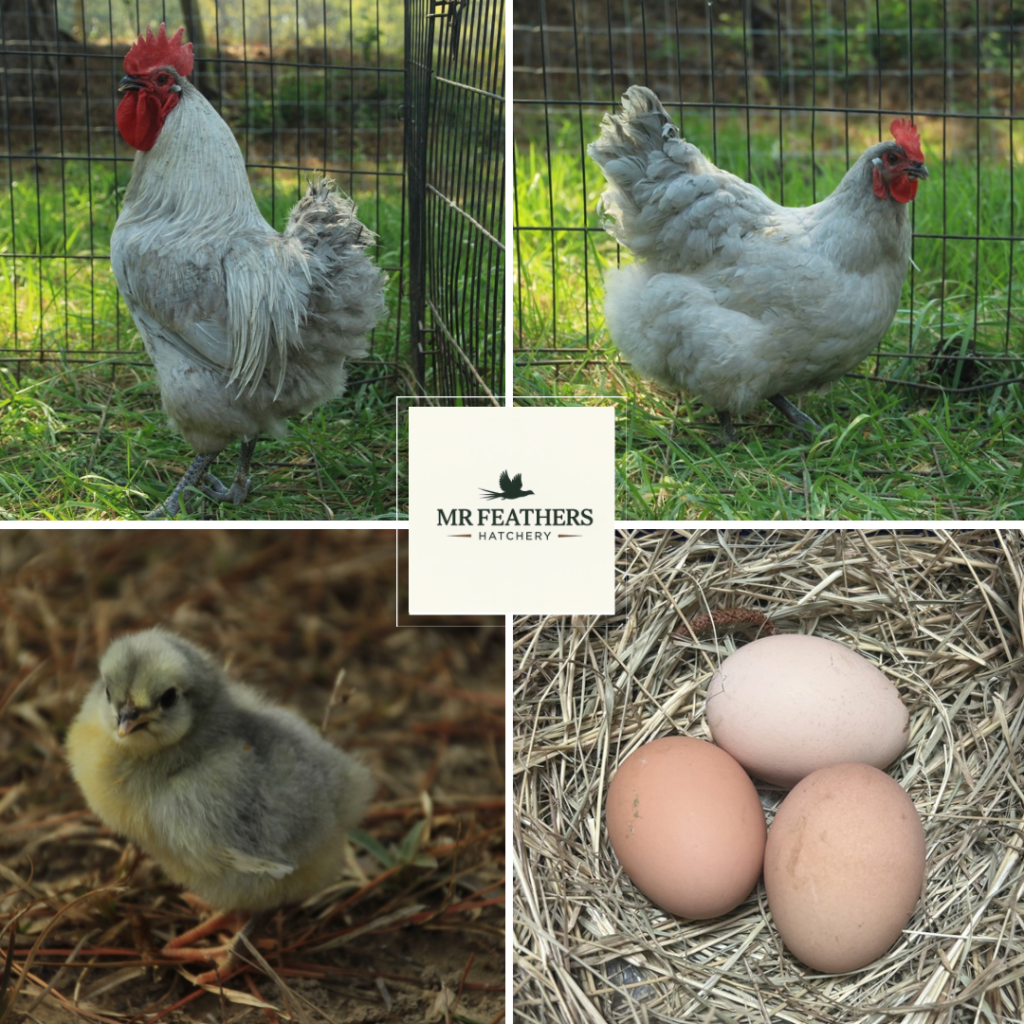
Lavender Orpington
A gentle and fluffy heritage breed prized for its soft lavender coloration and friendly personality. Lavender Orpingtons are excellent family birds and reliable layers.
Fun Fact: Orpingtons are often called “lap chickens” because of their calm, docile nature.
Egg Color: Light brown
Eggs Per Year: 180–220
Size: 7–10 lbs
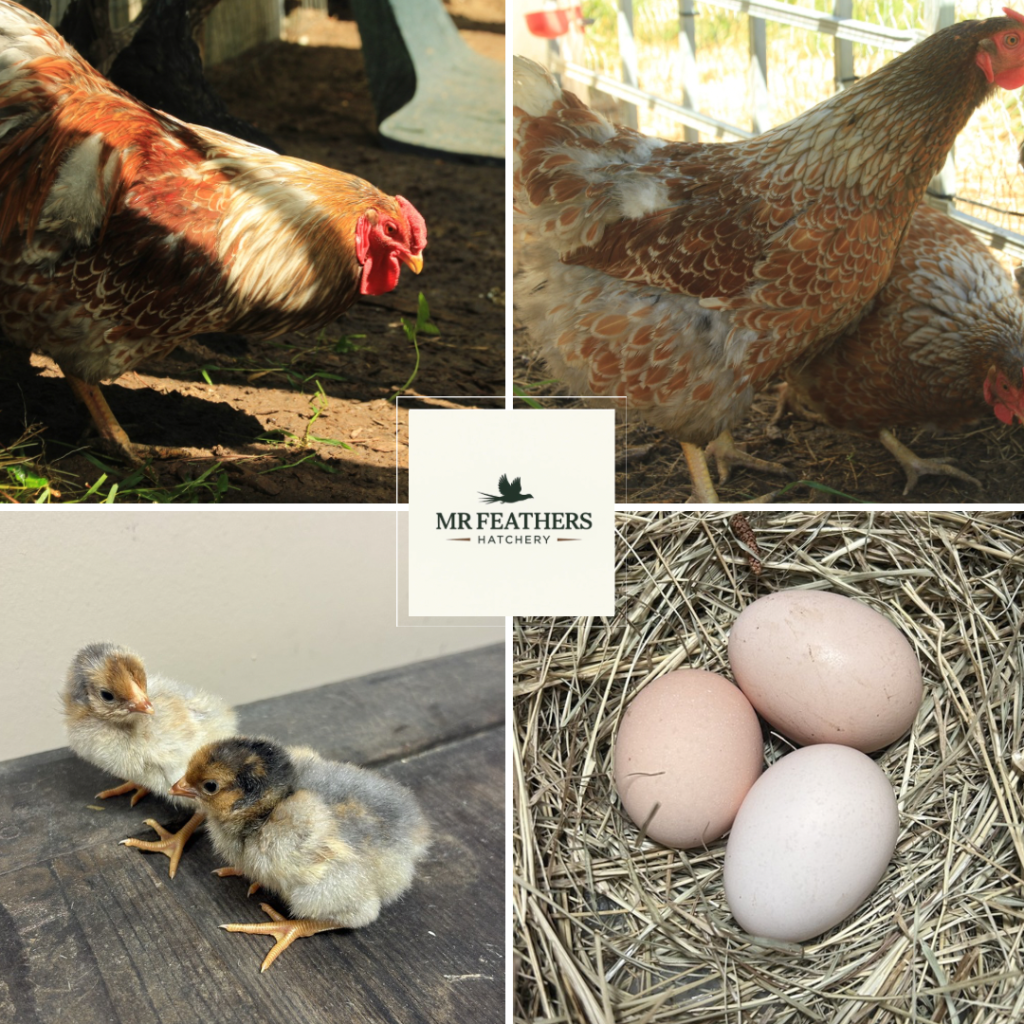
Blue Laced Red Wyandotte
A rare and eye-catching variety featuring deep red feathers outlined with blue lacing. Known for beauty and productivity, they combine ornamental appeal with solid egg production.
Fun Fact: Each bird’s lacing pattern is unique, making no two birds look exactly alike.
Egg Color: Brown
Eggs Per Year: 180–220
Size: 6–8 lbs
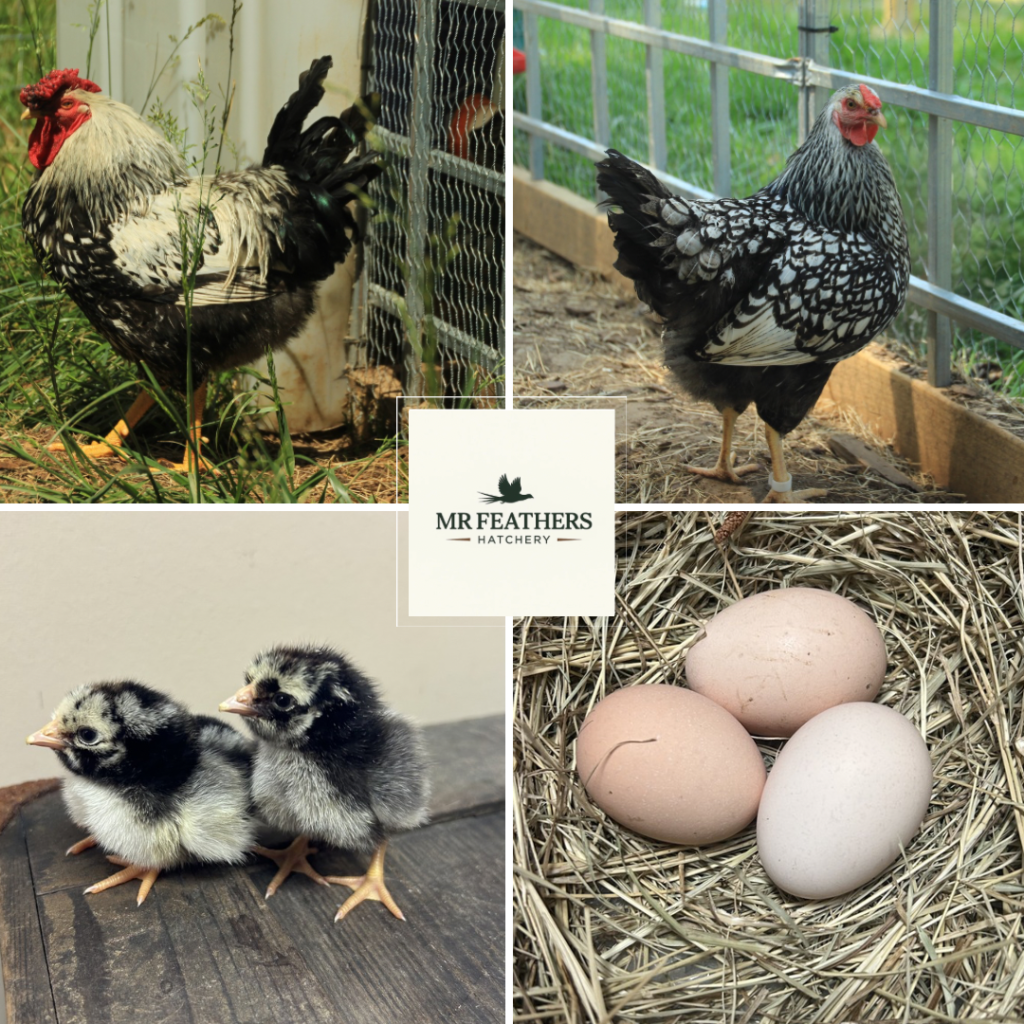
Silver Laced Wyandotte
A classic dual-purpose breed known for its striking black-laced silver feathers and calm temperament. Silver Laced Wyandottes are cold-hardy, dependable layers, and excellent backyard birds.
Fun Fact: Their rose comb helps prevent frostbite, making them ideal for colder climates.
Egg Color: Light brown
Eggs Per Year: 200–240
Size: 6–8 lbs
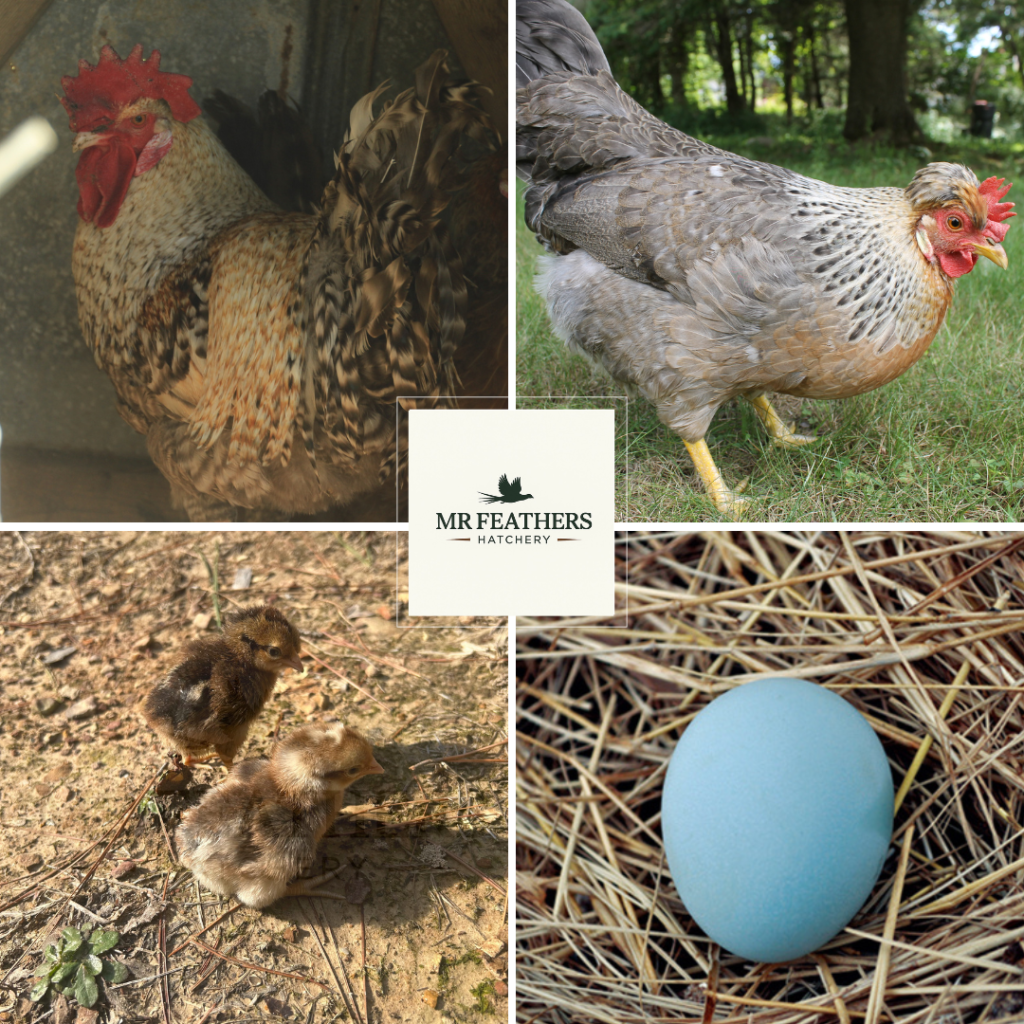
Crested Cream Legbar
An active and colorful breed famous for naturally laying blue eggs and sporting a distinctive feather crest. Cream Legbars are excellent foragers and easy to sex at hatch.
Fun Fact: Chicks can be identified as male or female immediately after hatching.
Egg Color: Blue
Eggs Per Year: 180–230
Size: 5–6 lbs
Pheasants:
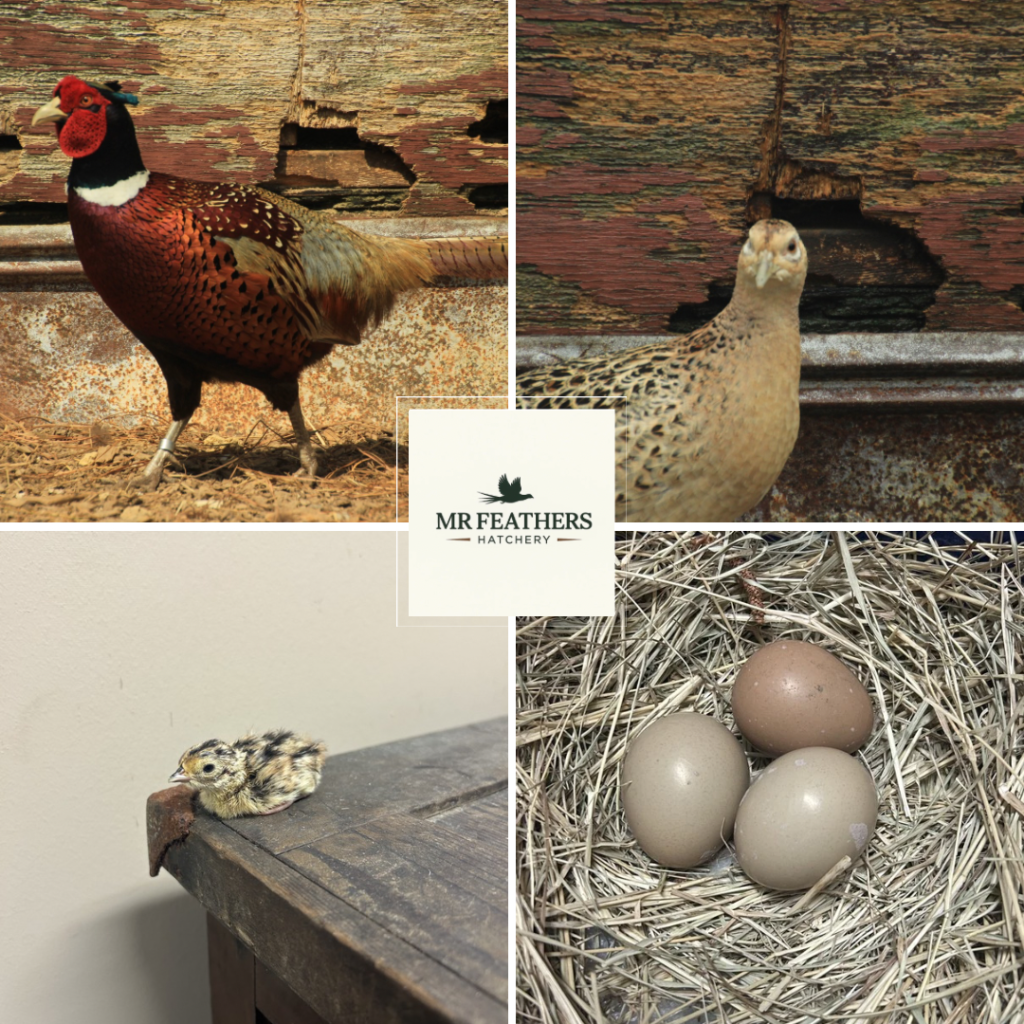
Jumbo Ringneck Pheasant
A large, hardy gamebird valued for strong flight ability and classic pheasant coloration. Popular for hunting preserves and ornamental collections.
Fun Fact: Ringneck pheasants can burst into flight at speeds over 35 mph.
Egg Color: Olive/tan
Eggs Per Year: 40–60
Size: 2.5–3 lbs
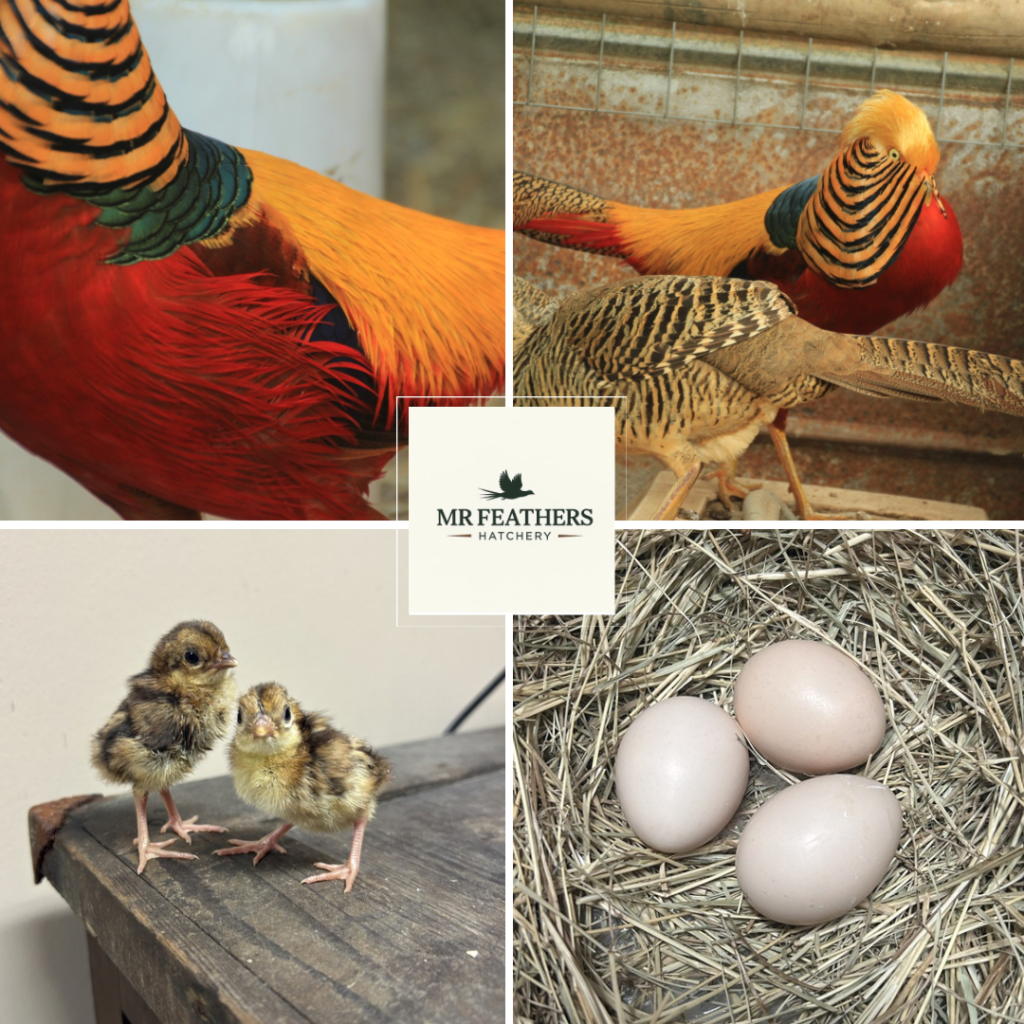
Red Golden Pheasant
One of the most brilliantly colored birds in the world, featuring golden crests and vibrant red plumage. Primarily kept as an ornamental aviary species.
Fun Fact: Males use their golden cape feathers in elaborate courtship displays.
Egg Color: Light tan
Eggs Per Year: 20–30
Size: 2–2.5 lbs
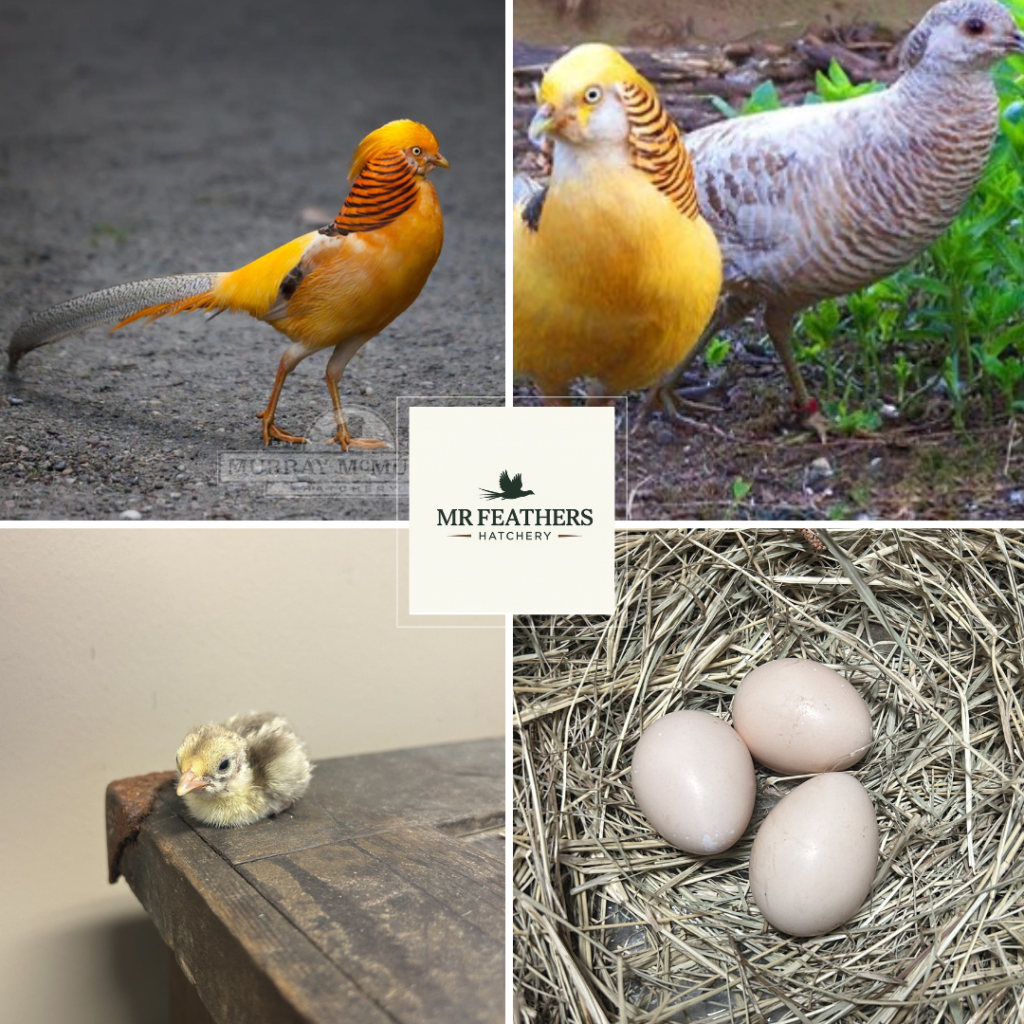
Yellow Golden Pheasant
One of the brightest and most eye-catching pheasants in aviculture, the Yellow Golden Pheasant displays vibrant yellow and gold plumage with elegant ornamental features. They are prized for both their beauty and rarity.
Fun Fact: Yellow Goldens are a color mutation of the Golden Pheasant and can produce stunning offspring when paired with other color varieties.
Egg Color: Light olive to tan
Eggs Per Year: 20–40
Size: 1.5–2.5 lbs
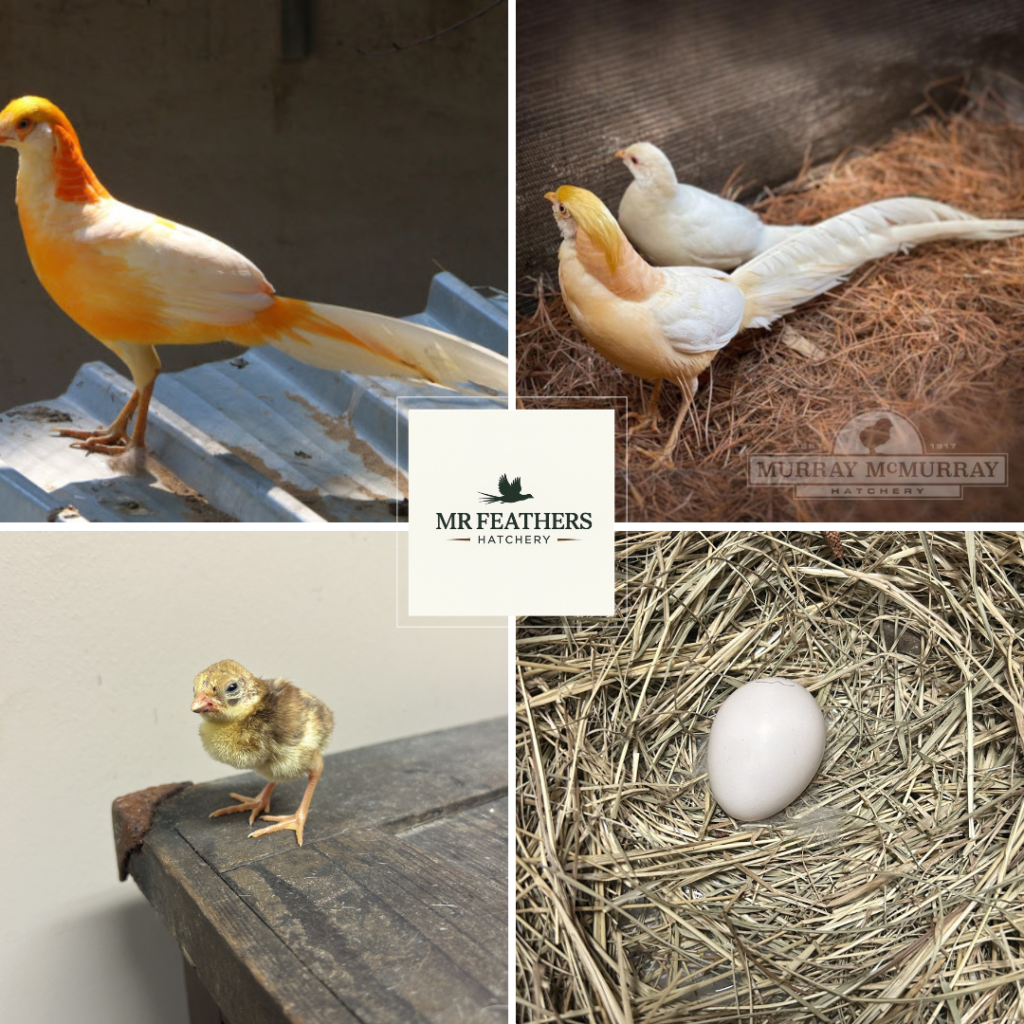
Peach Golden Pheasant
A rare and beautiful color mutation of the Golden Pheasant, known for its soft peach, cream, and golden plumage. Their unique appearance makes them a favorite among collectors and ornamental bird enthusiasts.
Fun Fact: Peach Golden Pheasants are significantly less common than traditional Golden Pheasants and are highly sought after in aviculture.
Egg Color: Light olive to tan
Eggs Per Year: 20–40
Size: 1.5–2.5 lbs
Quail:
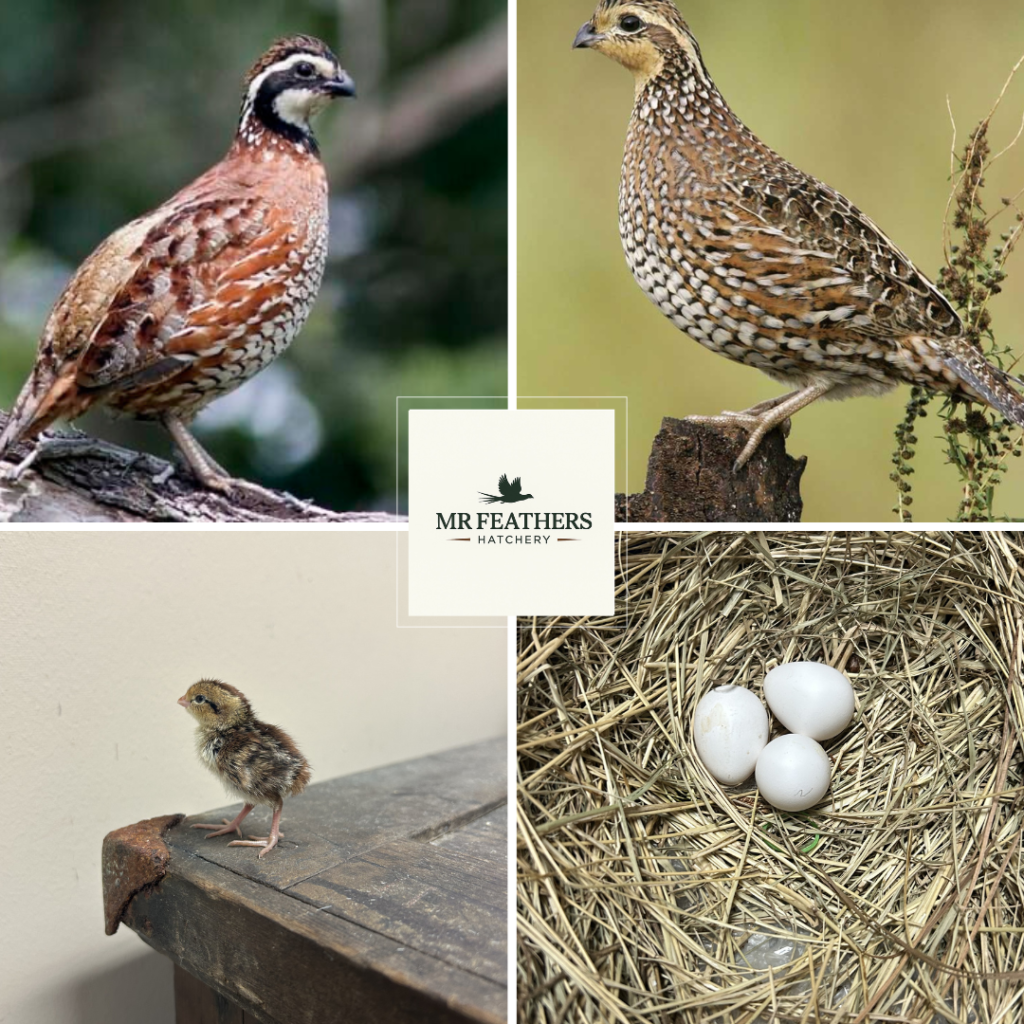
Northern Bobwhite
A native American quail species valued for conservation, hunting, and traditional gamebird breeding. Hardy and fast-maturing.
Fun Fact: The name “bobwhite” comes from their distinctive whistling call.
Egg Color: White with brown speckles
Eggs Per Year: 100–150 (seasonal)
Size: 5–7 oz
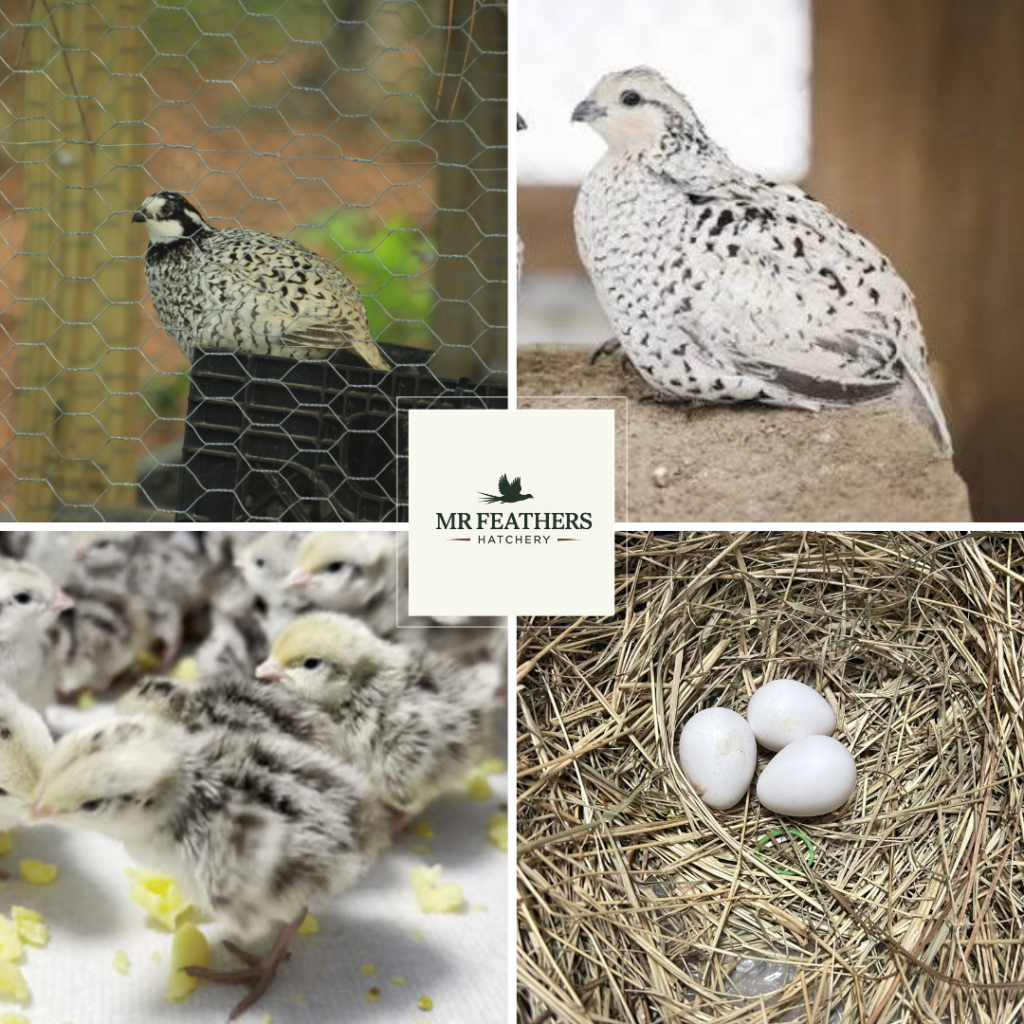
Snowflake Bobwhite
A unique color mutation of the Northern Bobwhite featuring white and light-patterned plumage while maintaining classic bobwhite traits.
Fun Fact: Despite their light coloration, they behave identically to wild-type bobwhites.
Egg Color: Speckled cream
Eggs Per Year: 100–150
Size: 5–7 oz
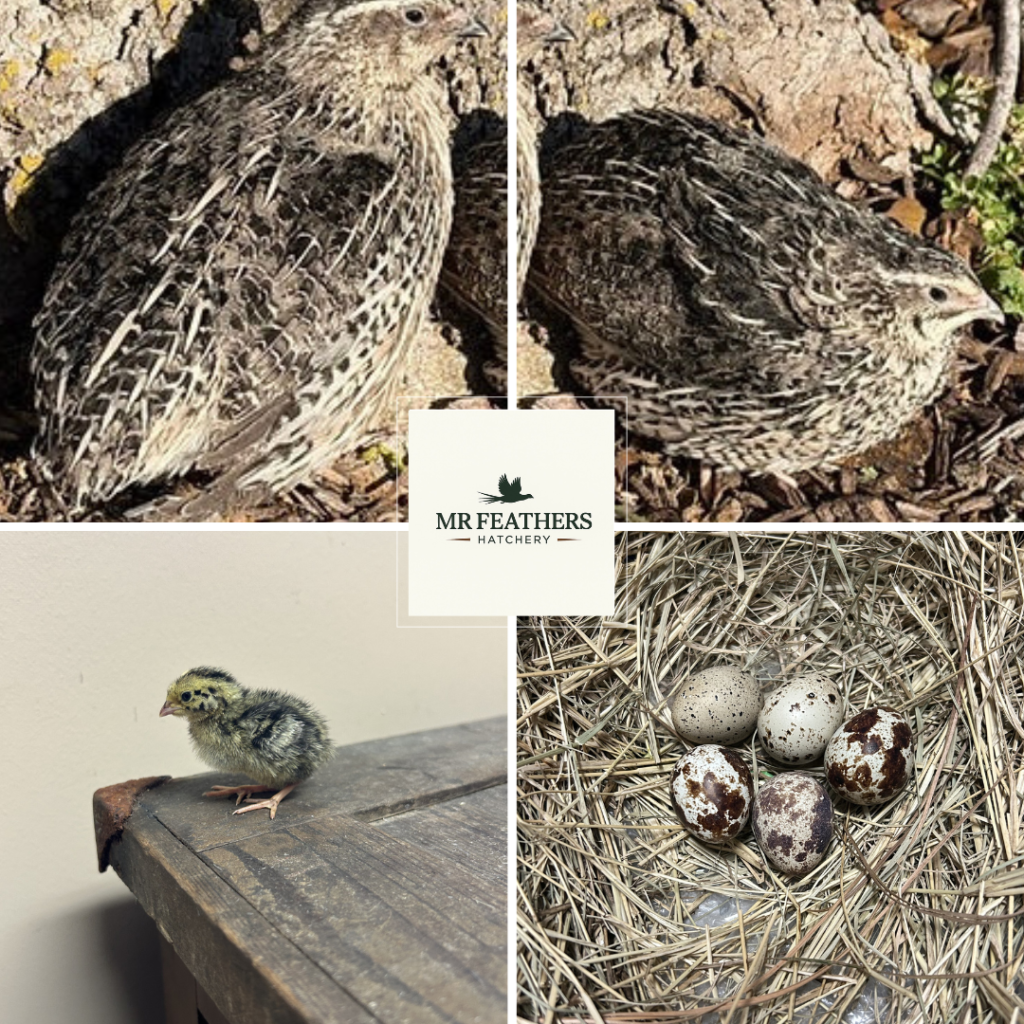
Falb Fee Coturnix
A rare feathered-leg Coturnix variety valued for its unusual appearance and strong laying ability.
Fun Fact: Feathered feet are uncommon in Coturnix and give them a distinctive ornamental look.
Egg Color: Speckled tan
Eggs Per Year: 220–280
Size: 9–11 oz
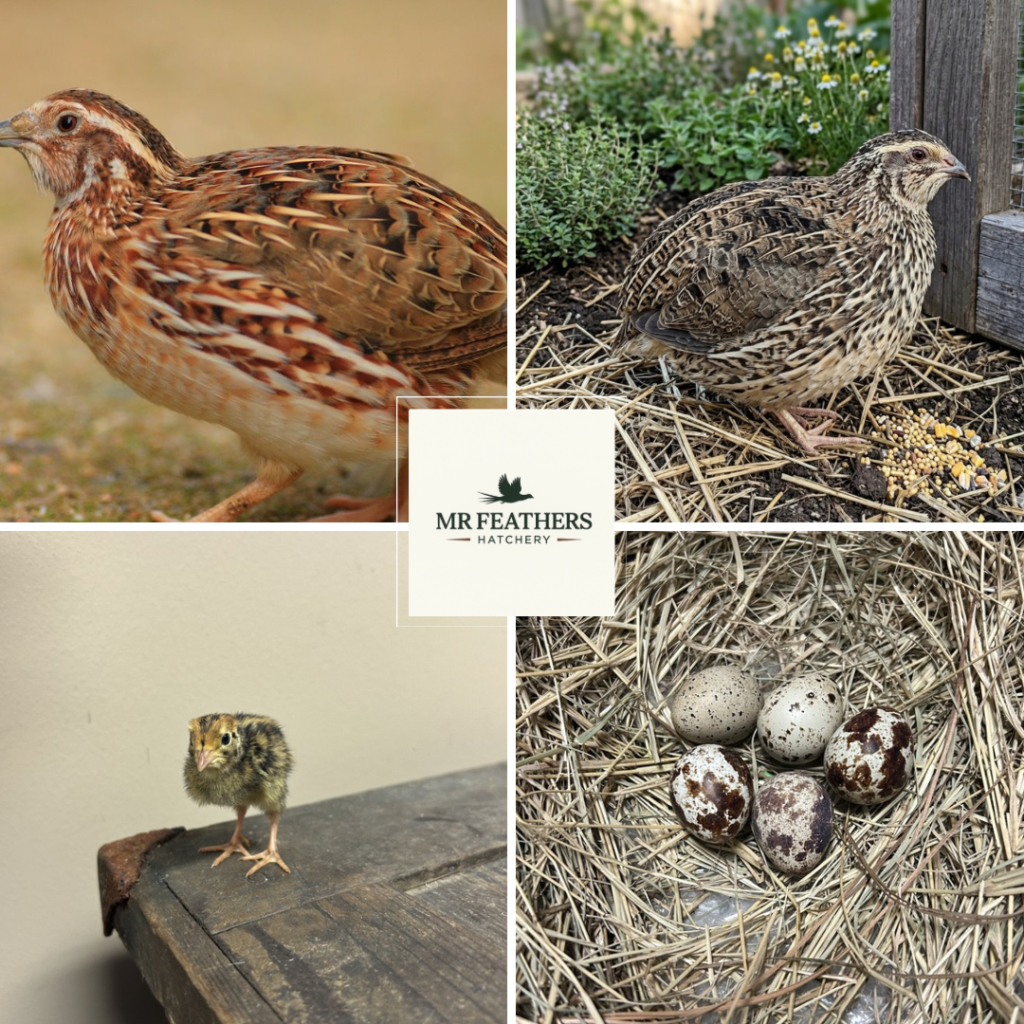
Jumbo Coturnix
Bred for larger body size and meat production while maintaining excellent egg output. One of the most practical quail varieties.
Fun Fact: Coturnix quail can begin laying eggs as early as 6–8 weeks old.
Egg Color: Brown speckled
Eggs Per Year: 250–300
Size: 12–16 oz
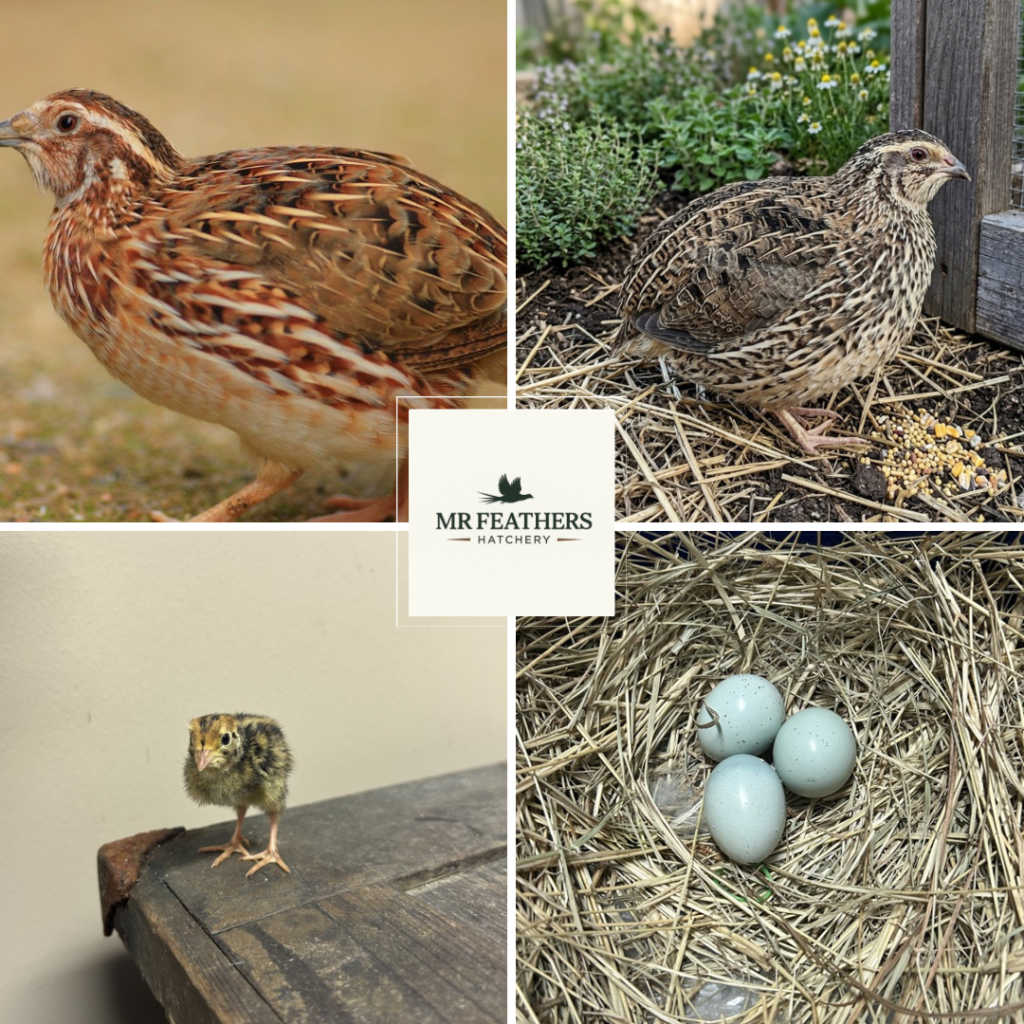
Celadon Coturnix
A specialty Coturnix quail known for producing beautiful blue eggs. Fast growing and highly productive layers.
Fun Fact: The blue egg color comes from a recessive genetic trait unique to celadon lines.
Egg Color: Blue
Eggs Per Year: 250–300
Size: 10–12 oz
Ducks:
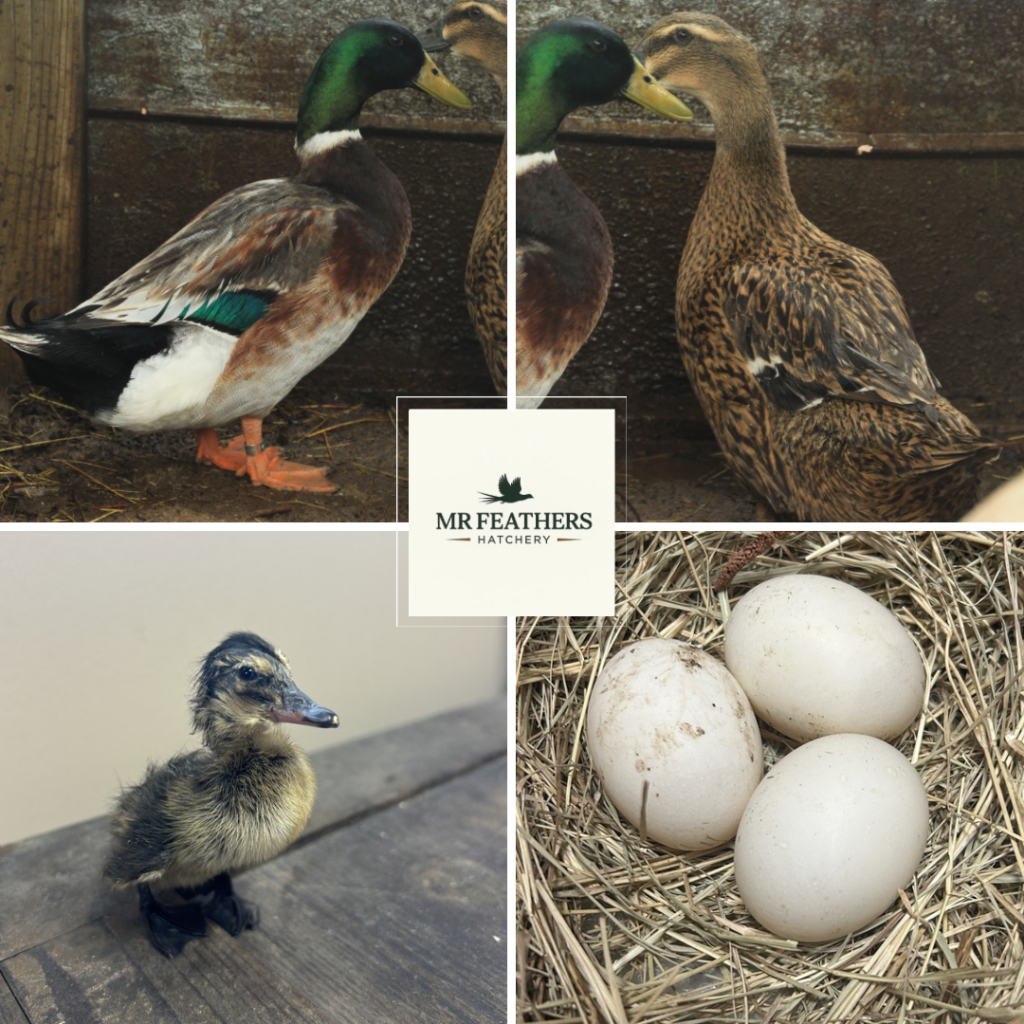
Rouen Duck
A large, domesticated duck breed developed from the wild mallard. Rouens are known for their impressive size, calm temperament, and beautiful mallard-like coloration, making them popular for exhibition and backyard flocks.
Fun Fact: Rouens were originally developed in France and are one of the largest mallard-derived duck breeds.
Egg Color: White to pale green
Eggs Per Year: 100–180
Size: 7–10 lbs
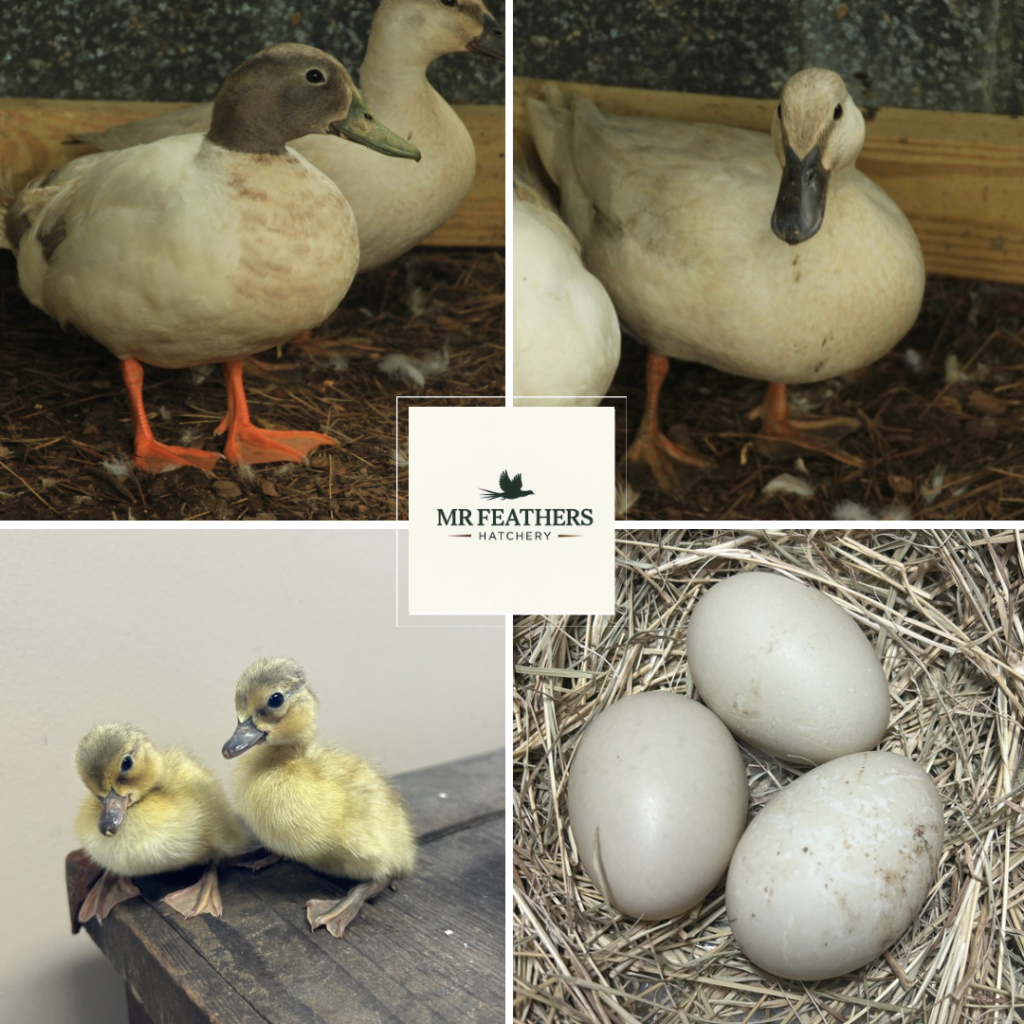
Silver Flying Mallard
A striking color variation of the wild mallard, Silver Mallards feature beautiful silver, cream, and white plumage while retaining the hardiness and adaptability of their wild ancestors. Excellent for ornamental ponds and breeding collections.
Fun Fact: Despite their unique coloration, Silver Mallards share the same ancestry and natural behaviors as wild mallards.
Egg Color: Pale green to off-white
Eggs Per Year: 60–120
Size: 3–5 lbs
Pigeons:
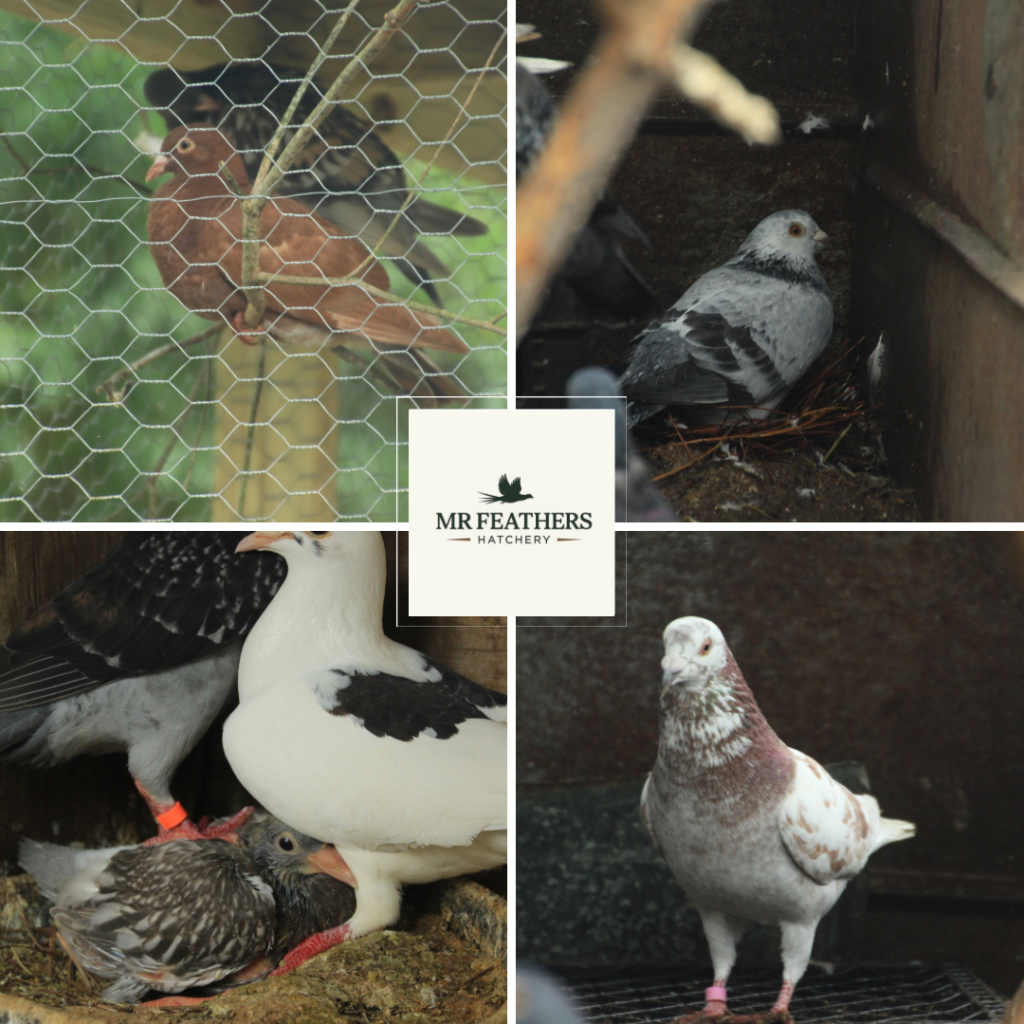
Portuguese Figurita Pigeon
A small ornamental pigeon known for elegant posture and unique feather patterns. Popular among exhibition breeders.
Fun Fact: Figurita pigeons are admired more for beauty and form than flight performance.
Egg Color: White
Eggs Per Year: 10–14 (pairs of eggs)
Size: Small (8–10 oz)
Homing Pigeon
A highly intelligent breed famous for its ability to navigate long distances and return home reliably. Strong flyers and attentive parents.
Fun Fact: Homing pigeons have been used to deliver messages in wartime for over a century.
Egg Color: White
Eggs Per Year: 12–16 (pairs of eggs)
Size: 12–16 oz